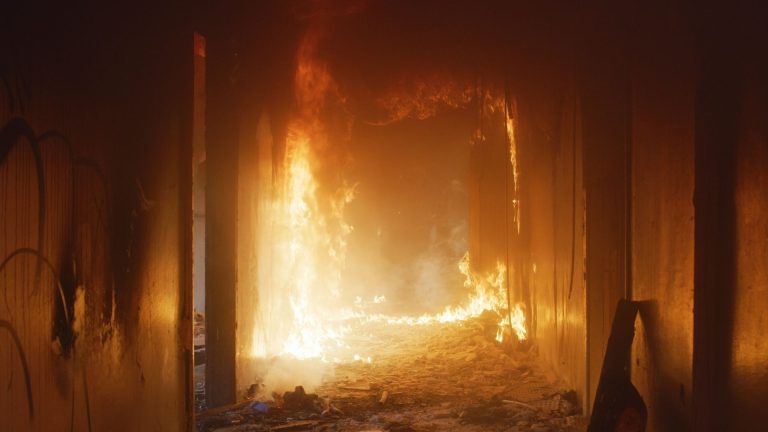
Every fire, whether it damages a single room or disrupts an entire industrial facility, begins with the same basic ingredients coming together at the wrong moment. Most workplace fires, for example, arise from a variety of sources, including electrical faults, unattended hot work, flammable material storage, and human error.
Recognising these ignition risks is critical to developing effective fire safety protocols, ensuring regulatory compliance, and implementing targeted prevention strategies that keep workplaces safe and operational.
Why Understanding How Fires Start Can Save Lives
Fires start from seemingly small acts. An unwatched chip pan on a gas hob. A damaged cable behind a desk. Burning debris left smouldering on a windy afternoon. Each is routine until heat, fuel, and oxygen align, and within minutes a manageable situation becomes an emergency. In England alone, fire and rescue services attended over 24,000 accidental dwelling fires in the year ending March 2023, and 254 people died in fire-related incidents in the year ending March 2026.
The pattern extends far beyond homes. Between 2022 and 2026, record-breaking wildfires across the UK and Europe demonstrated how quickly fires spread when weather conditions turn dangerous. In 2022, nearly 900,000 hectares burned across Europe and surrounding regions, making it the second-worst wildfire season on record.
This article examines how fires start across three main settings – homes, workplaces, and the wider landscape – and connects ignition causes to practical prevention. Because FireArrest works with passive fire protection teams and building safety managers, the examples here tie fire science directly to building safety, fire stopping, and digital compliance.
The Fire Triangle: The Three Things Every Fire Needs
Fire needs three elements: heat, fuel, and oxygen. This is the fire triangle, and it is the foundation of all fire science. Some specialists extend this to a fire tetrahedron by adding a fourth component: the chemical chain reaction that keeps combustion going once it starts.
Each element plays a specific role:
- Heat sources include stoves, heaters, electrical equipment, open flames, and lightning strikes. Heat raises a material’s temperature to its ignition point.
- Fuel is any combustible material – paper, timber, furniture, gas, cooking oil, dry vegetation, or yard debris. Fuel characteristics such as moisture content and surface area directly impact ignition risk.
- Oxygen usually comes from the air around us, which contains roughly 21% oxygen. Ventilation feeds fire; restricting airflow can slow or stop it.
Consider a tea towel draped over a gas hob. The burner provides heat, the cotton fabric is fuel, and the kitchen air supplies oxygen. On a forest floor, dry pine needles serve as fuel, lightning provides the heat source, and wind-driven air delivers oxygen. In both cases, the chemical reaction begins the moment all three things meet.
Every effective fire prevention strategy – including passive fire protection – works by removing or controlling at least one side of this triangle.
How Do Fires Start in Homes?
Most domestic fires start accidentally, and common causes include unattended cooking, heating equipment, and electrical faults. In England, cooking appliances caused around 44% of accidental domestic fires in 2022–23, making it the single most common cause of home fires.
The main ignition sources include:
- Cooking: chip pan fires, electric hobs left on, food igniting under a grill, frying without attention.
- Electrical faults: overloaded extension leads, damaged cables, multi-plug adapters stacked behind furniture – all generating sparks or heat that can ignite nearby combustible material.
- Heating: portable heaters positioned too close to soft furnishings, curtains, or bedding.
- Candles and open flames: left unattended near paper, textiles, or curtains.
Improperly discarded smoking materials are also a significant cause of home fires. While cigarettes and related materials started only about 8% of accidental dwelling fires, they accounted for 35% of fire-related fatalities – a stark reminder that not all ignition sources carry equal risk.
Modern risks are evolving too. Charging e-bikes or vapes under pillows, on beds, or near soft furnishings can trigger thermal runaway in lithium-ion batteries. UK data from 2025 showed firefighters responding to a lithium-ion battery fire on average once every five hours.
In multi-occupancy residential buildings, fire compartmentation and properly maintained fire doors slow fire and smoke spread even after ignition, providing valuable extra time for evacuation.
Who Is Most at Risk When Fires Start?
Fires can affect anyone, but certain groups face consistently higher risk of injury or death. In the UK, older adults are heavily overrepresented in fire fatality statistics. People over 65 account for roughly 36% of fire deaths, and those over 80 have the highest death rate per million population.
Higher-risk groups include:
- Older adults living alone, especially those with reduced mobility.
- People with cognitive impairments or heavy sleep patterns caused by medication or alcohol.
- Young children with limited understanding of fire danger.
- Residents in high-rise buildings or poorly maintained housing with limited escape options.
Socio-economic deprivation compounds the risk. Lower-income homes are more likely to have older electrical installations, overcrowded rooms that increase fire loading, non-compliant heaters, and – critically – no working smoke alarms. London Fire Brigade data showed that in nearly half of accidental dwelling fires during 2017–18, there was no working smoke alarm in the room where the fire started.
How Do Forest Fires and Wildfires Start?
Forest fires and wildfires can ignite from both natural causes and human activity, though in many regions humans cause the vast majority of ignitions. Human activity causes over 84% of wildfires, according to data from both the United States and Europe. In the EU in 2022, human actions were linked to as many as 96% of wildfire ignition events.
Natural causes of wildland fire include lightning strikes, volcanic activity, and occasional spontaneous combustion of dry organic material during heatwaves. Lightning is the most common natural cause of wildfires, particularly in remote forested areas where response times are longer.
Human causes of wildfire ignition are more varied:
- Burning debris on windy days
- Unattended campfires
- Discarded cigarettes from vehicles
- Sparks from machinery and equipment use
- Power lines making contact with dry vegetation
- Deliberate arson
Dry vegetation, long-term drought, and accumulated fuel such as dead branches, leaf litter, and dry grass on the forest floor make wildfires easier to start and much harder to control once burning. The 2022 European wildfire season has illustrated this clearly: extreme heat, low humidity, and tinder-dry fuels turned small ignitions into large-scale disasters across southern Europe.
Natural Causes of Fire Ignition
While natural causes are beyond direct human control, climate change and land management decisions increasingly shape their impact. Understanding them helps fire safety professionals and government agencies plan for scenarios that no amount of housekeeping can fully prevent.
Lightning is the most common natural cause of wildfires worldwide. A single strike can ignite trees, dry grass, and even damage power lines, starting fires that may go undiscovered for hours. More than 90% of the area burned in Australia’s Black Summer was from lightning-caused fires – a reminder that naturally caused wildfires can be catastrophic in scale.
Volcanic eruptions are a more localised ignition source. Lava flows and hot pyroclastic material can set surrounding vegetation alight, though this is primarily relevant in geologically active regions rather than the UK or most of mainland Europe.
Spontaneous combustion occurs when materials heat themselves to their ignition point without an external spark or flame. This is most common in agriculture and industry – piles of hay, compost, coal, or oily rags can generate internal heat faster than they dissipate it, eventually reaching ignition temperature. Prolonged hot, dry weather makes this more likely.
Even when wildfires start naturally, their frequency and severity now interact strongly with human-driven climate change. Fire activity in many regions has intensified not because natural ignition sources have increased, but because fuels are drier and weather conditions more extreme.
Human Causes of Fires: The Most Common Cause in Modern Settings
In modern homes, workplaces, and forests near developed areas, human-caused fires dominate the statistics.
The main categories of human causes include:
| Careless use of heat and flame | Cooking left unattended, candles near curtains, smoking in bed, hot work without permits |
| Electrical faults | Overloaded sockets, damaged wiring, unattended charging devices |
| Deliberate ignition (arson) | Arson accounts for 21% of wildfires in the U.S. and is suspected in roughly 10% of European forest fires |
| Poor control of burning debris | Unsupervised garden waste burning, yard debris fires near woodland |
| Fireworks and campfires | Campfires improperly managed cause 5% of wildfires; fireworks near dry grass pose similar risks |
Human-caused wildfires spread twice as fast as natural ones, partly because they tend to ignite closer to roads, structures, and developed areas where fuel loads may be higher and response is complicated by property protection.
What makes human-caused fires particularly frustrating is that most are preventable. Taking simple actions such as charging e-bikes away from escape routes, keeping fire doors closed, storing cardboard away from heat sources, and supervising waste burning can significantly reduce the risk of fire occurring.
How Fires Start and Spread in Workplaces
Around 22,000 workplace fires are reported annually in the UK. The causes follow familiar patterns but add complexity because of the variety of materials, processes, and building configurations involved.
Typical workplace ignition sources include:
- Faulty or poorly maintained electrical equipment and overloaded sockets.
- Hot surfaces from industrial processes, cooking facilities, and mechanical sparks.
- Smoking in undesignated areas, particularly near stairwells or storage.
- Flammable liquids, gases, and combustible packaging stored without adequate separation.
- Dust build-up in workshops, factories, and server rooms.
Workplace-specific hazards go beyond ignition. Unnecessary fire loading from stored paper, cardboard, textiles, and plastics increases the fuel available if a fire does start. Cluttered escape routes, blocked fire doors, and unsealed service penetrations do not start fires themselves, but they allow small incidents to grow and spread rapidly between compartments.
Under UK fire safety legislation, including the Regulatory Reform (Fire Safety) Order 2005, building owners must conduct regular fire risk assessments and keep documented evidence of fire safety measures. This includes records of fire stopping installations, electrical testing (EICR and PAT), and regular fire safety surveys. Maintaining accurate, accessible records is not optional – it is a legal requirement.
From Ignition to Inferno: How Wildfires Spread So Quickly
Once wildfires start, their fire behaviour is shaped by fuel, weather, and terrain – not simply by the size of the initial flame. A cigarette butt can start a fire that burns thousands of hectares if conditions align.
Wildfires spread through fine fuels like dry grass and leaves first, then into shrubs and trees. Ladder fuels – low branches, bushes, and accumulated debris – allow fire to climb from the ground into the forest canopy, where rapid spread becomes almost impossible to stop. Regular yard maintenance and removing accumulated debris significantly reduce this risk around structures.
Wind is the most dangerous accelerant. Strong winds carry embers ahead of the main fire front, igniting roofs, gutters, and piles of burning debris kilometres away. These spot fires can outpace ground-based firefighting crews entirely. Fire breaks can help stop the spread of wildfires by removing continuous fuel, but they are only effective when properly maintained.
On steep slopes, fires travel much faster uphill. Rising heat pre-dries and pre-heats vegetation above the flame front, sometimes doubling or quadrupling spread rates. This interaction between topography and fire behaviour is why water nearby and defensible space around buildings matter so much in wildland-urban interface zones.
Fire Science Basics: From Spark to Sustained Combustion
Combustion is a chemical reaction between a fuel and an oxidiser – usually oxygen in the air – that releases heat, light, smoke, and combustion products. It is a chemical process that sustains itself as long as all required elements remain present.
The fire tetrahedron adds a critical fourth element to the fire triangle: the sustaining chemical chain reaction. Breaking any one of the four elements – removing heat, fuel, oxygen, or interrupting the chain reaction – will extinguish a fire. This principle underlies every suppression method.
Fire can spread through conduction, convection, radiation, and direct flame contact:
- Conduction is the transfer of heat through direct contact with a hot surface – for example, a steel beam carrying heat through a wall.
- Convection transfers heat through the movement of fluids or gases, carrying hot smoke and air upward through stairwells and shafts.
- Radiation transfers heat through electromagnetic waves without direct contact, pre-heating combustible material across a room.
- Direct flame contact is when the flame from one part of the fire ignites the surrounding materials.
Classification of Fires
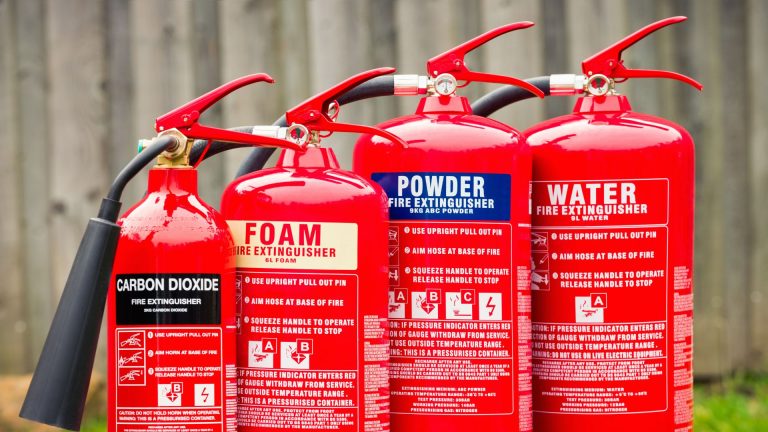
Fires are classified into different categories based on the type of fuel involved, which determines the appropriate extinguishing methods:
- Class A: Solid combustible materials like wood, paper, cloth, and plastics.
- Class B: Flammable liquids such as petrol, diesel, paint, and solvents.
- Class C: Flammable gases including propane, butane, and methane. (In the US classifications, Class C refers to electrical fires)
- Class D: Combustible metals like magnesium, lithium, and aluminium shavings.
- Class F: Cooking oils and deep-fat frying fats. (Please note that in the US this is referred to as Class K)
- Class L (Emerging): Lithium-ion battery fires, recently recognised via BS ISO 3941:2026 guidelines.
This is why specific extinguishers are chosen based on fuel type, why hot work permits exist, and why dust and vapour controls matter in industrial settings.
Stopping Fires Before They Start: Prevention Strategies
Preventing ignition is always safer and cheaper than fighting an established fire, whether in homes, workplaces, or across open ground. Below we’ve shared some helpful fire prevention tips:
In homes:
- Never leave cooking unattended; keep combustible material away from hobs.
- Maintain appliances and replace damaged cables promptly.
- Fit smoke alarms on every floor and test monthly – you are 11 times more likely to die in a fire without a working smoke alarm.
- Charge devices and e-bikes on hard surfaces, away from escape routes.
- Keep candles away from curtains and extinguish them before leaving a room.
In workplaces:
- Schedule regular electrical inspections (EICR) and Portable Appliance Testing.
- Enforce strict housekeeping – clear escape routes, remove unnecessary fire loading.
- Store flammable materials according to COSHH and DSEAR requirements.
- Use hot work permits for welding, grinding, and cutting operations.
- Conduct and document regular fire risk assessments.
In the outdoor environment:
- Restrict burning debris during high-risk periods and dry weather.
- Campfires should be monitored and fully extinguished to prevent wildfires.
- Use spark arrestors on machinery; avoid operating near dry grass on high-risk days.
All of these measures need documentation. Well-structured digital records demonstrate that reasonable steps were taken to prevent fires and reduce ignition risks. Please remember: if you do see a fire in any setting, raise the alarm, get out, and call 999. Only tackle a fire if you’re trained, it’s small, and you have a clear escape route behind you.
Passive Fire Protection: Limiting Damage When Fires Do
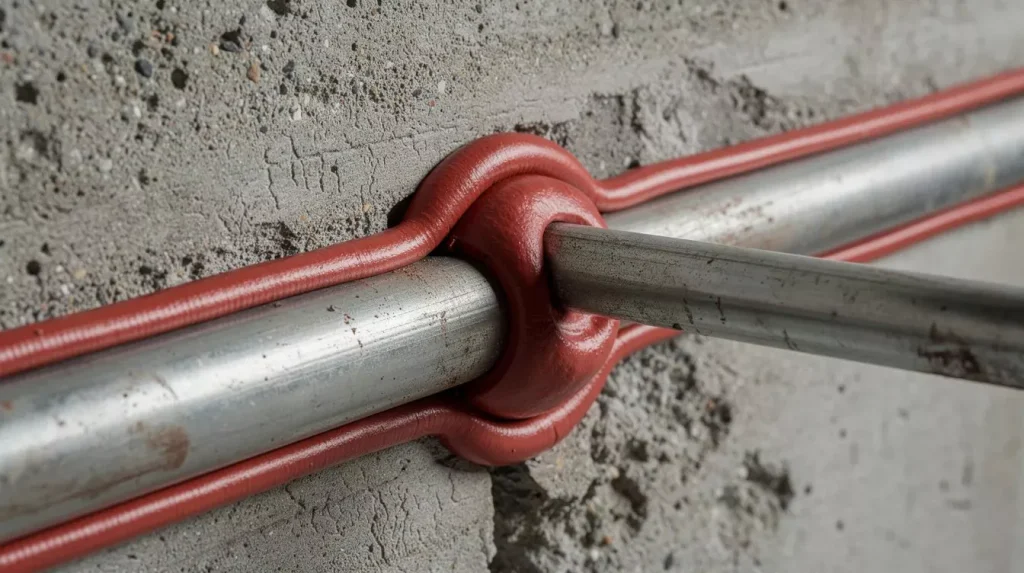
When ignition does occur, passive fire protection is the built-in layer that slows fire and smoke spread. This includes fire compartmentation, fire stopping around service penetrations, fire-resistant walls and floors, and compliant fire doors.
Correctly sealed cable trays, pipe penetrations sealed with appropriate fire stopping materials, and self-closing fire doors contain fires to the room or compartment of origin. This buys time – time for occupants to evacuate and for fire services to respond.
Typical weaknesses include:
- Unsealed pipes or cables following refurbishment work.
- Fire doors propped open with wedges or blocked by stored items.
- Undocumented ad-hoc penetrations made during building alterations.
- Degraded fire stopping that has not been inspected since installation.
For contractors and building safety managers, the challenge extends beyond initial installation. Most compliance gaps appear when maintaining an accurate, up-to-date audit trail across years of alterations. Every modification to a building’s fabric – every new cable run, every relocated pipe – potentially compromises compartmentation unless properly fire-stopped and recorded.
Digital Compliance and FireArrest: Managing Fire Risk Proactively
As buildings grow more complex and regulations tighten, manual paperwork and scattered spreadsheets are no longer adequate to manage fire safety responsibilities. The volume of installations, inspections, and remedial works across multiple sites demands a structured digital approach.
FireArrest’s easy-to-use software system helps fire protection contractors, surveyors, and compliance managers capture installation evidence, manage fire stopping tasks, and produce audit-ready reports.
Key capabilities of FireArrest include:
- Structured fire safety audits and risk assessments.
- Inspections, including fire door inspections with photographic evidence tied to floor plans.
- Defect tracking.
- Clear task allocation across teams and sites.
- Cloud-based records accessible to auditors, regulators, and clients.
Consider a large residential block or hospital where hundreds of service penetrations need to be logged, inspected, and maintained over years of ongoing refurbishment. FireArrest allows teams to tag each penetration on a floor plan, attach timestamped photographs, track defects, and generate reports that support building safety cases – all from a single platform.
Understanding how fires start is the first step. Maintaining the evidence that your buildings are properly protected is where the real work begins. If you are responsible for passive fire protection across one site or many, book a demo and see how a cloud-based system supports your fire prevention strategy.